I Sailed the Kimberley with Pearl Expeditions, and It Changed How I See My Country
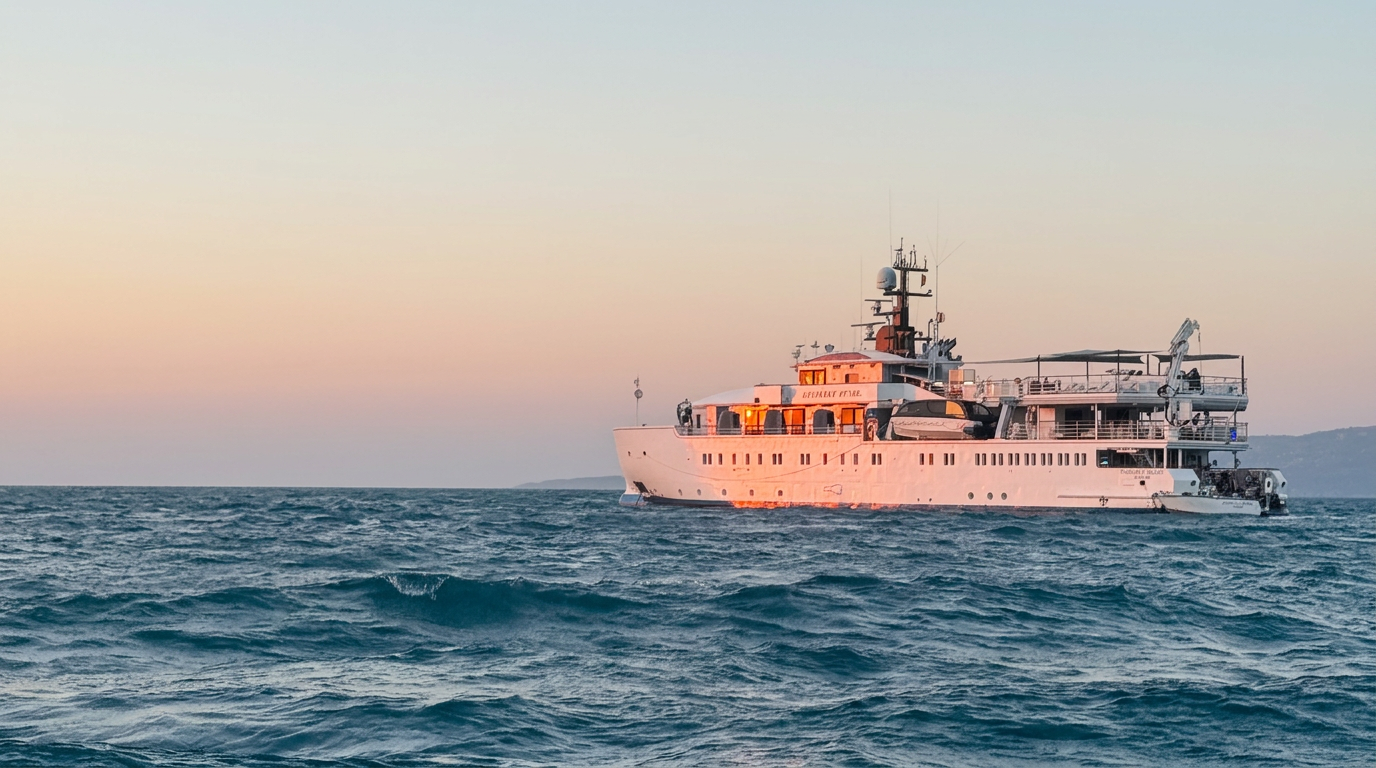
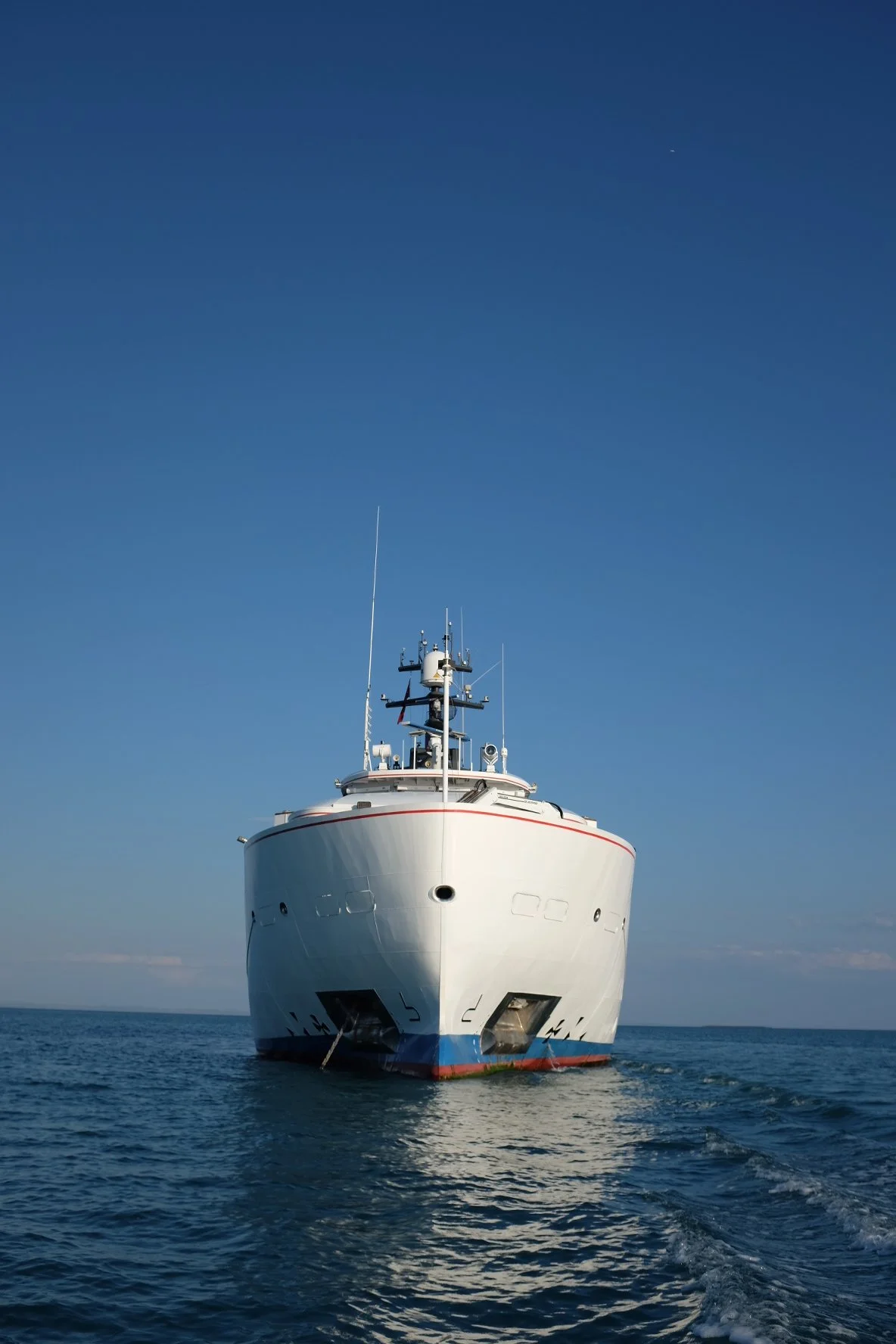
The Paspley Pearl, Pearl Expedition’s flagship.
The Kimberley does not announce itself gently. Some 1.8 billion years in the making, it's one of the oldest, least populated landscapes on Earth, built on extremes, extreme tides, extreme isolation, extreme age. I've spent years sending clients to some of the most remote corners of the planet, but nothing quite prepared me for ten nights on this coast aboard Paspaley Pearl, the flagship of the new Pearl Expeditions line.
We began in Kununurra, a gateway town in the East Kimberley where boab trees stand like sentries over the red dirt, each one so distinctly gnarled it feels less like flora and more like a resident you're meeting for the first time. If you're heading that way yourself, do what I did and base yourself at Freshwater Apartments beforehand, the best spot in town. I spent an afternoon wandering among those boabs before the real adventure began. The morning before we embarked, we joined the Ord River Experience with Triple J Tours, included in our package by Pearl Expeditions, a full day cruising the Ord River, a riverside buffet lunch, a look at the Ord Top Dam, and a stop at the Durack Homestead Museum. I met Jeff, the original owner, still out guiding on contract, and his fluency with this landscape, and evident investment in its conservation, was obvious within minutes. It also turned out to be the perfect icebreaker, a relaxed first chance to start getting to know the fellow passengers I'd be sharing the next ten days with. Some had arrived early enough to gather their own local intelligence, and passed it on freely: dinner at the Pumphouse, they said, and the Gourmet Camp Oven Experience, a four course dinner served beneath chandeliers in the open outback, were both essential. Both are now firmly on my list for next time!
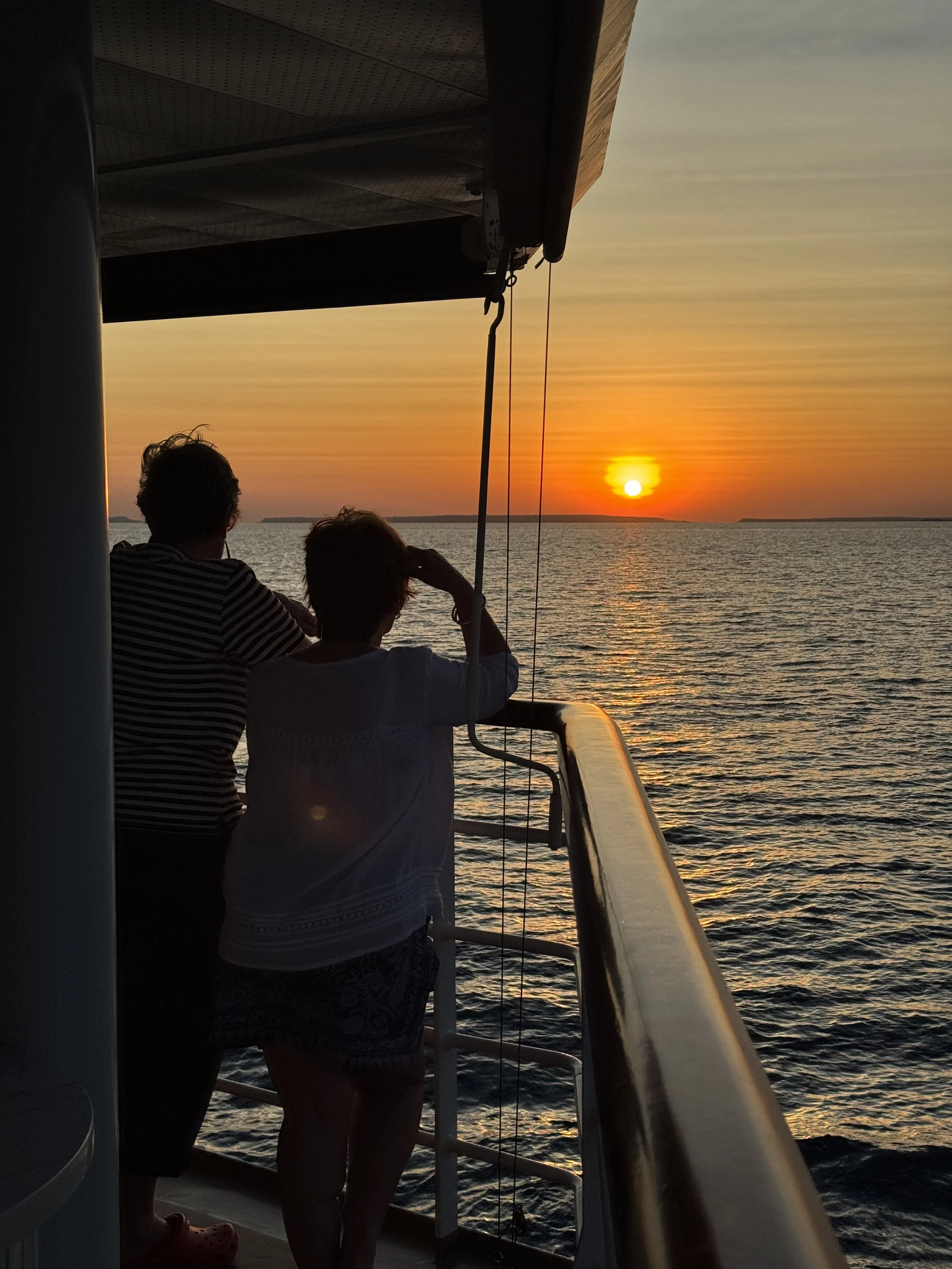
Then came the departure from Wyndham, and it's not one I'll forget. We pulled away just as the sun was setting, and moments later the sky lit up with flame. For a moment there was real alarm on board, until the crew let us know it was a scheduled controlled burn by the local fire department, routine practice, but a spectacular coincidence of timing all the same. Alarm turned to awe fairly quickly. Watching that fire glow against the darkening sky as we sailed out felt less like leaving a town and more like the Kimberley farewelling us properly before the wild took over.
A partnership decades in the making
Paspaley Pearl carries a legacy with it. The Paspaley family have been pearling these waters for close to ninety years, their name synonymous with the industry that built much of the Kimberley's modern economy. When they partnered with Sarina Bratton AM, the same woman behind Orion Expedition Cruises and the person who effectively put Kimberley expedition travel on the map, they brought together deep local knowledge with genuine expertise in small ship travel. You feel that pairing everywhere on board. With just 32 guests, our days never felt like a schedule to be ticked off. They felt like an invitation to slow down and actually notice things, to let the tides dictate the pace rather than a clock.
Where the ancient meets the immediate
One morning I woke in Koomala Bay to find us anchored between sheer rock faces, the water a deep, still blue. With dawn lightening the sky I took myself to the Horizon Deck for a coffee, watching the ship stir to life around me. There's something instructive in observing an expedition crew prepare for the day, the quiet efficiency of it, every piece of equipment checked and readied without fuss. It tells you plainly how seriously this team takes both safety and experience.
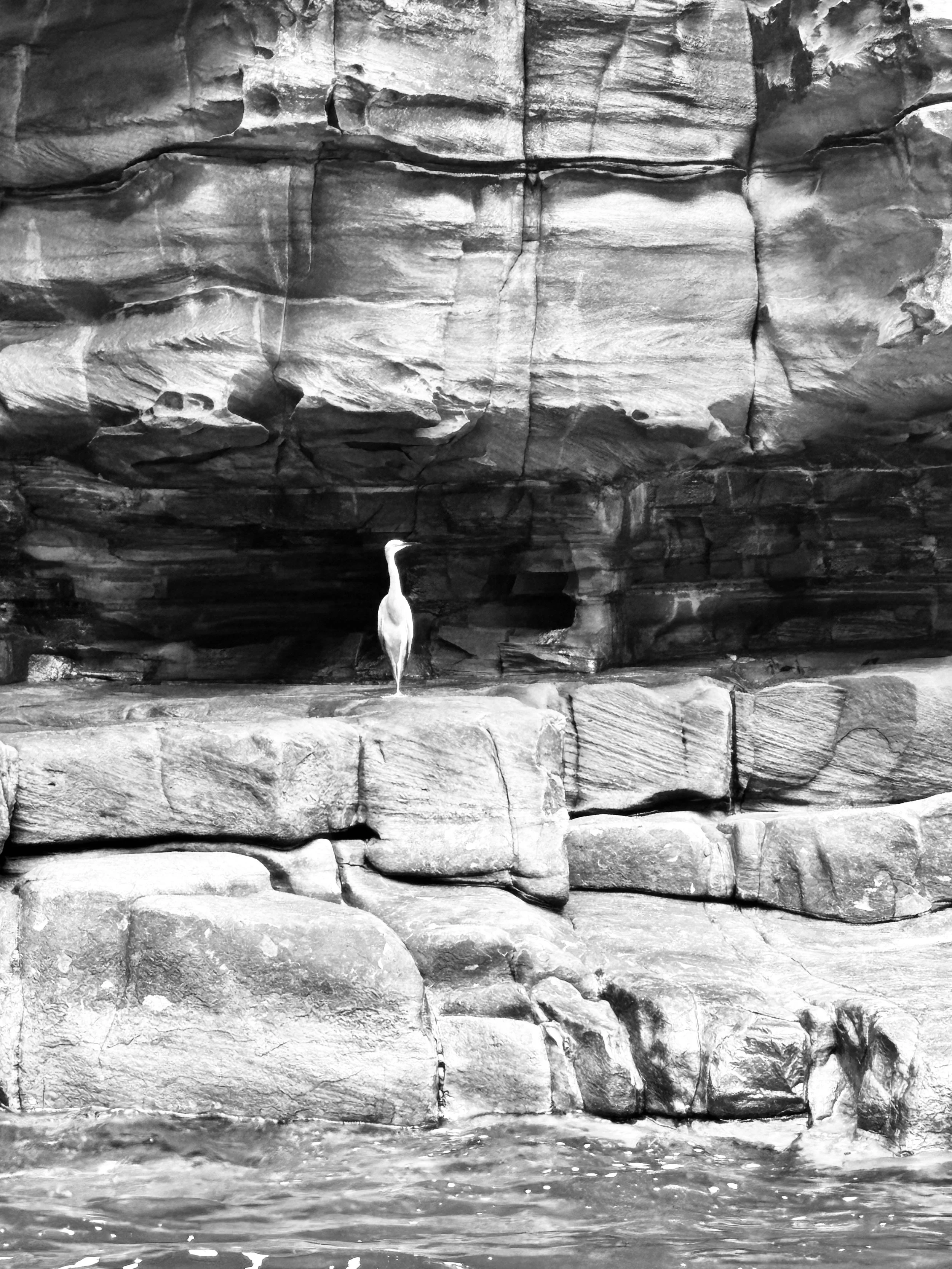
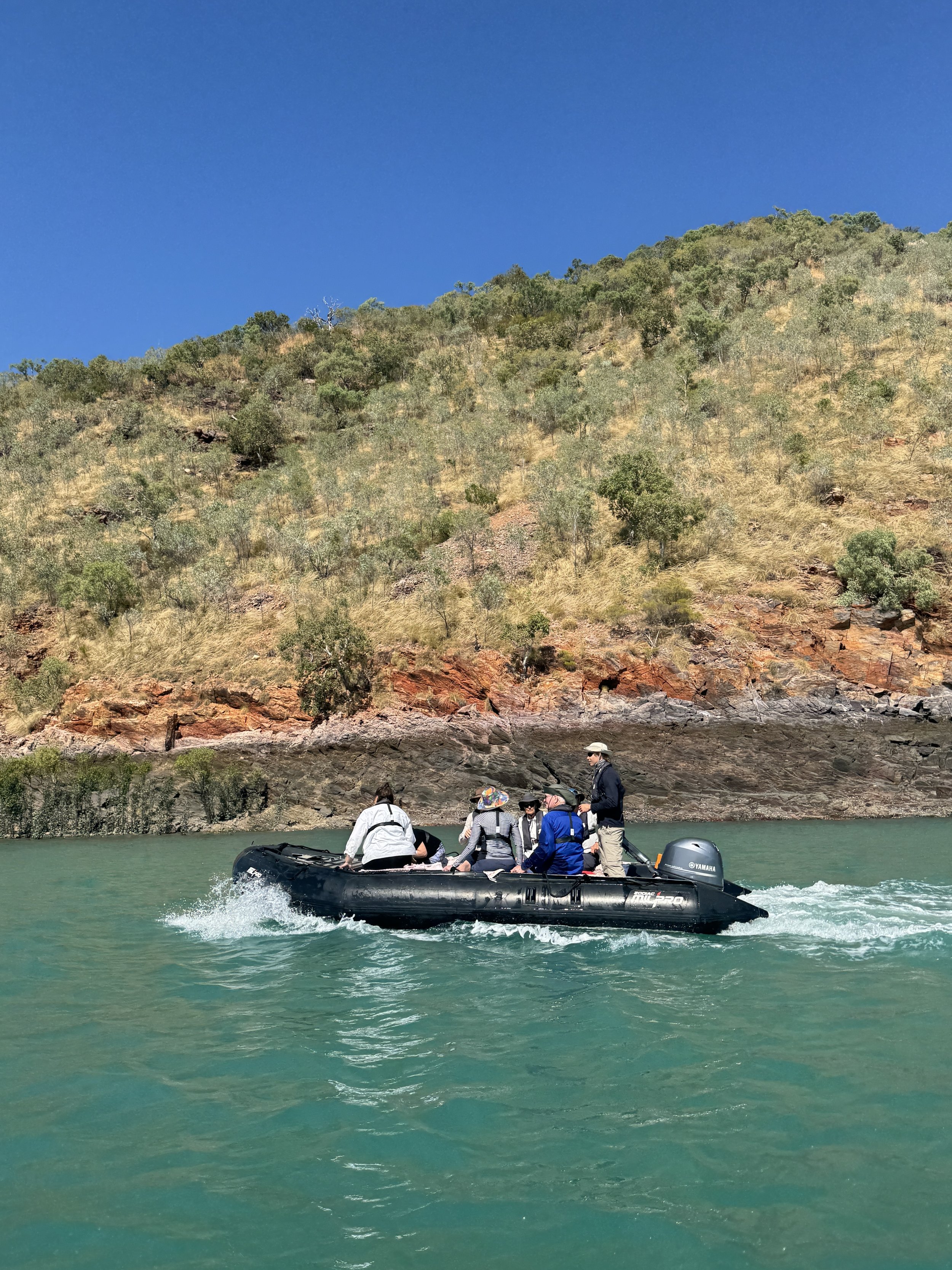
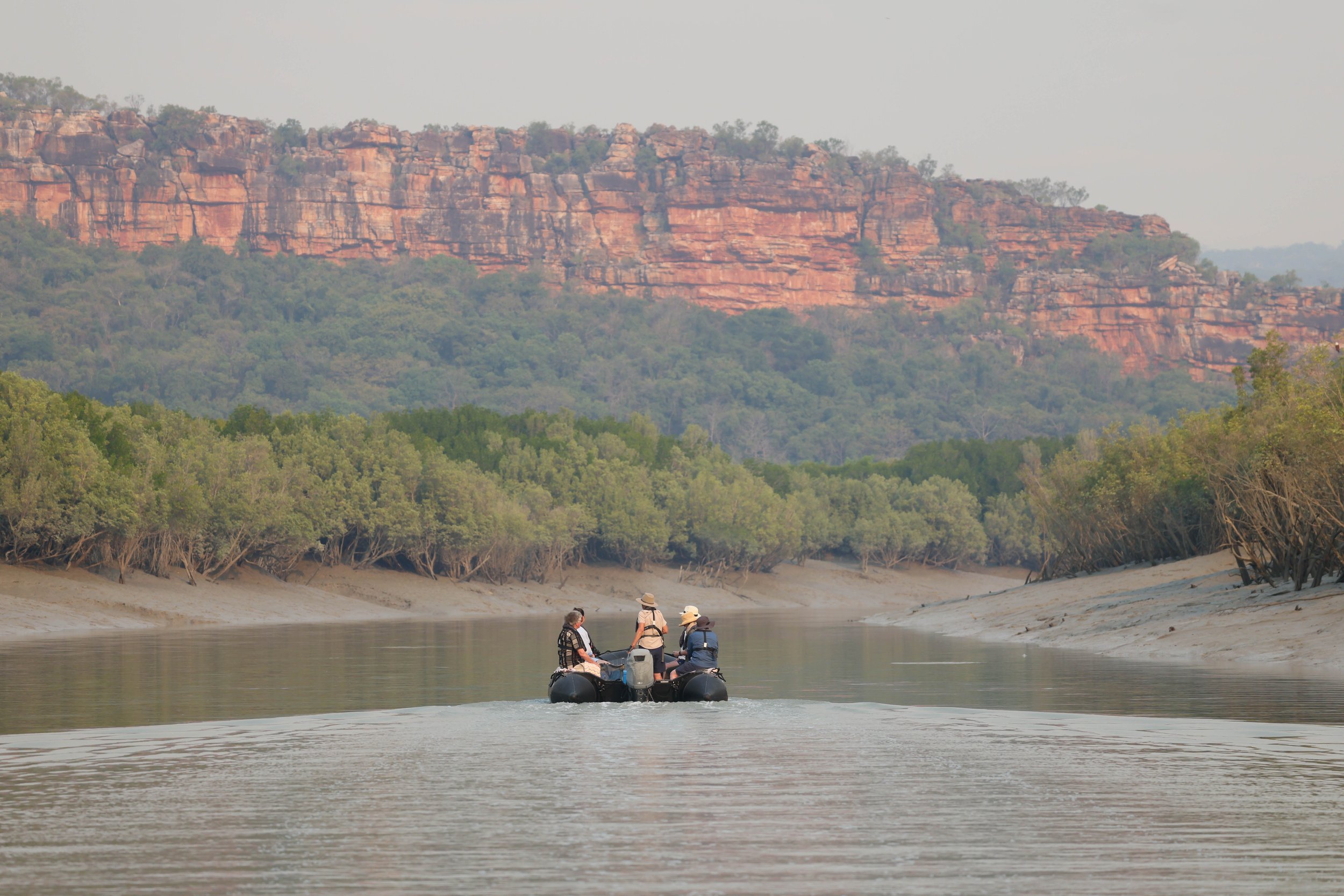
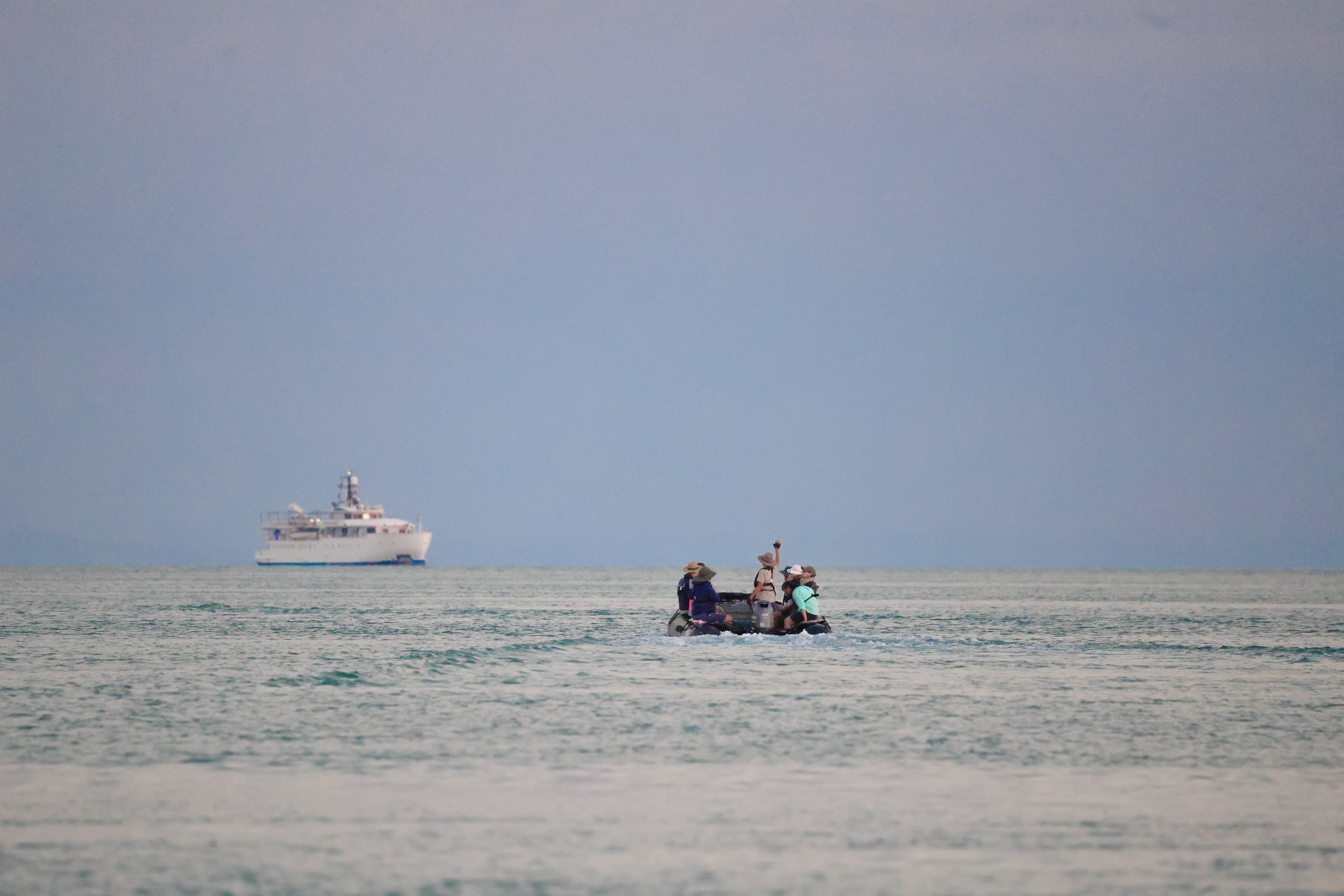
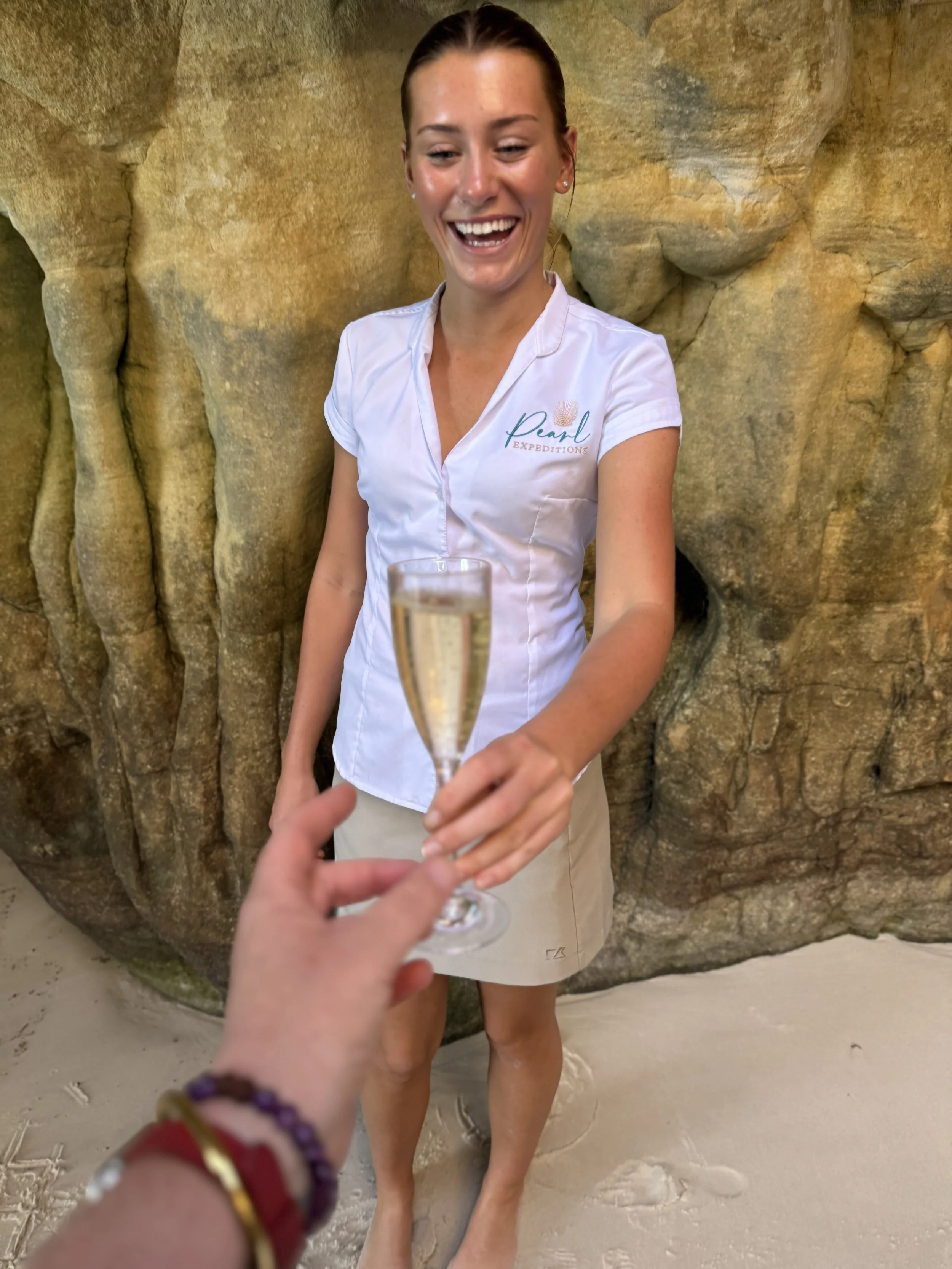
Our first proper taste of the wild came at King George River, cruising by Zodiac beneath sandstone walls that seemed to rise straight out of the water. The warmth of the southern winter sun on my skin as we moved through the gorge is something I'll keep coming back to. Partway through, the crew had a surprise waiting to mark the true start of the voyage, our Zodiacs were rafted together mid-river and bottles of champagne popped, so we could toast the Kimberley as a group with those sandstone walls rising all around us. Magical!
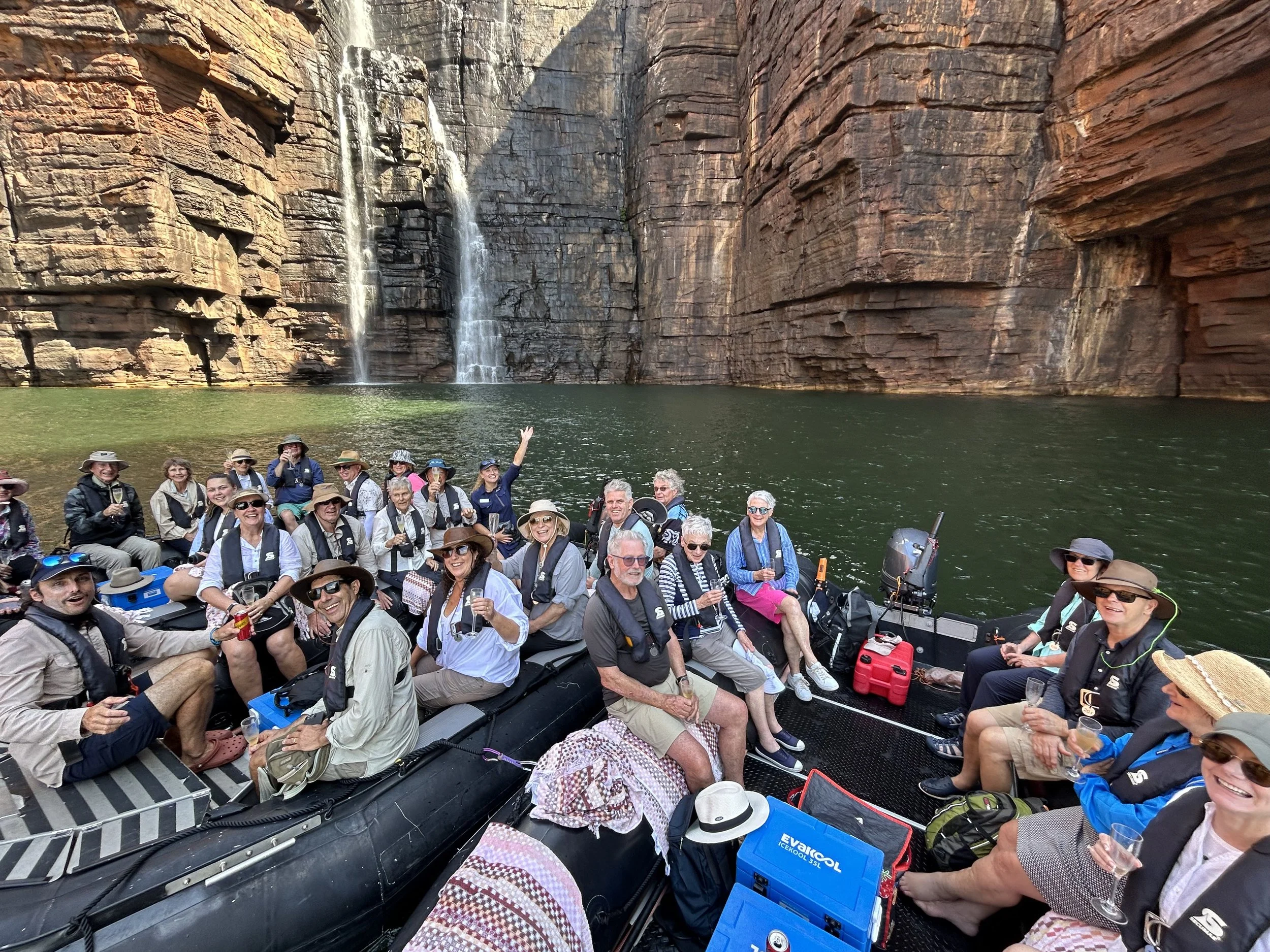
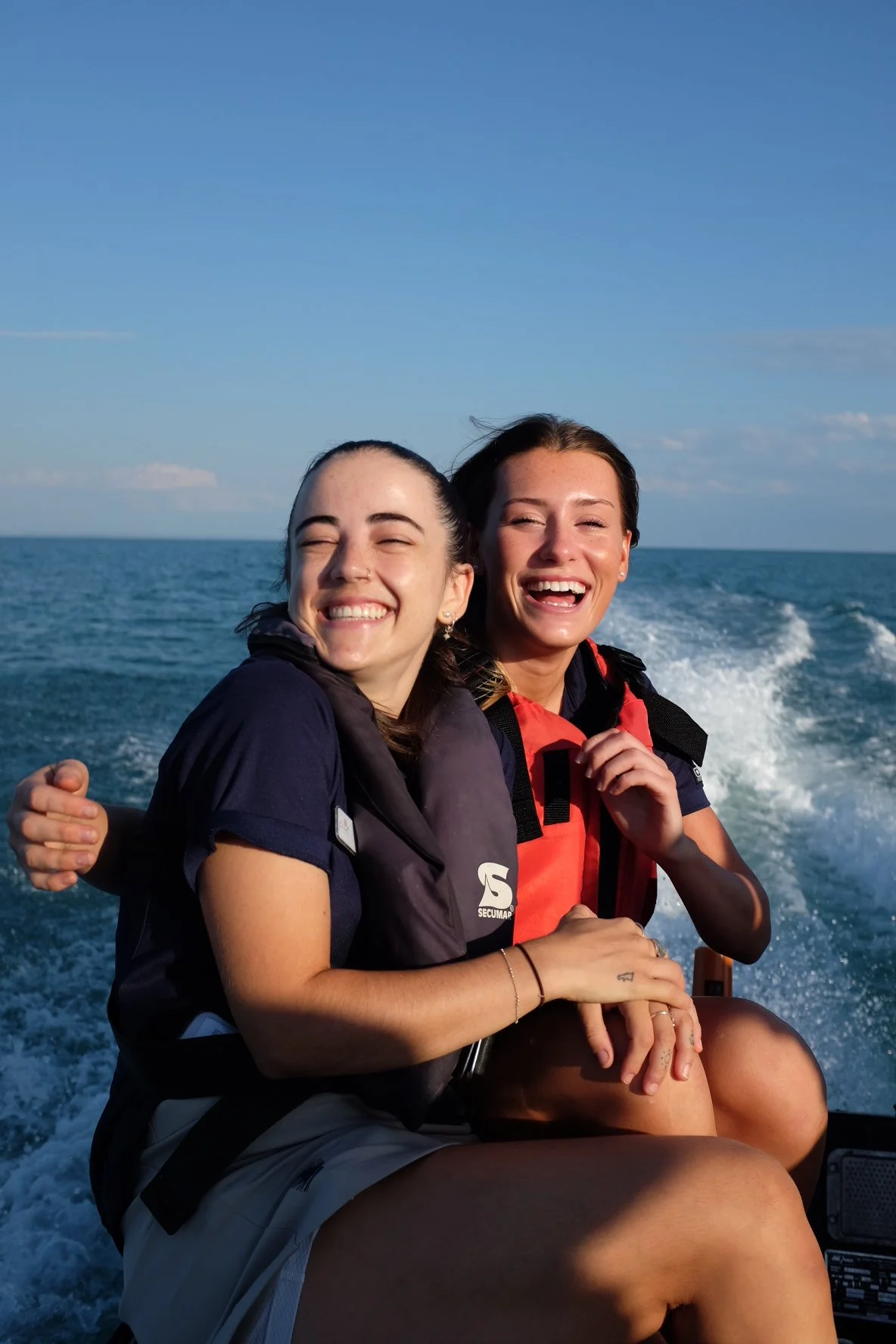
My amazing co-passengers at King George Falls, toasting the beginning of our voyage with bubbles
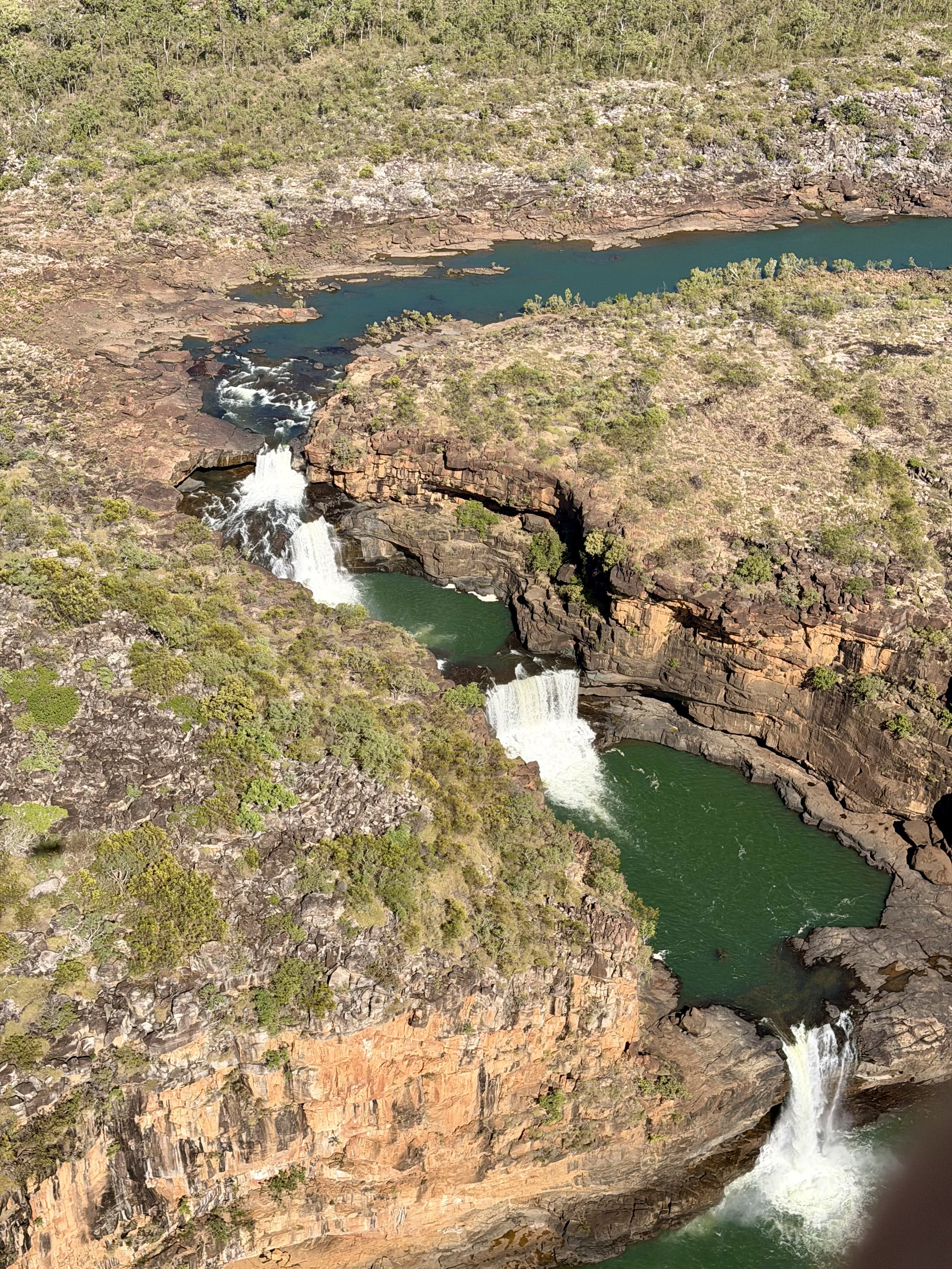
I also took up the optional helicopter excursion to Mitchell Falls, and it's one I'd urge anyone to say yes to. Seeing those tiered falls open up from the air is spectacular in itself, but the real reward was landing and swimming in the freshwater waterhole at the top, a proper, cooling dip with that view all to ourselves.
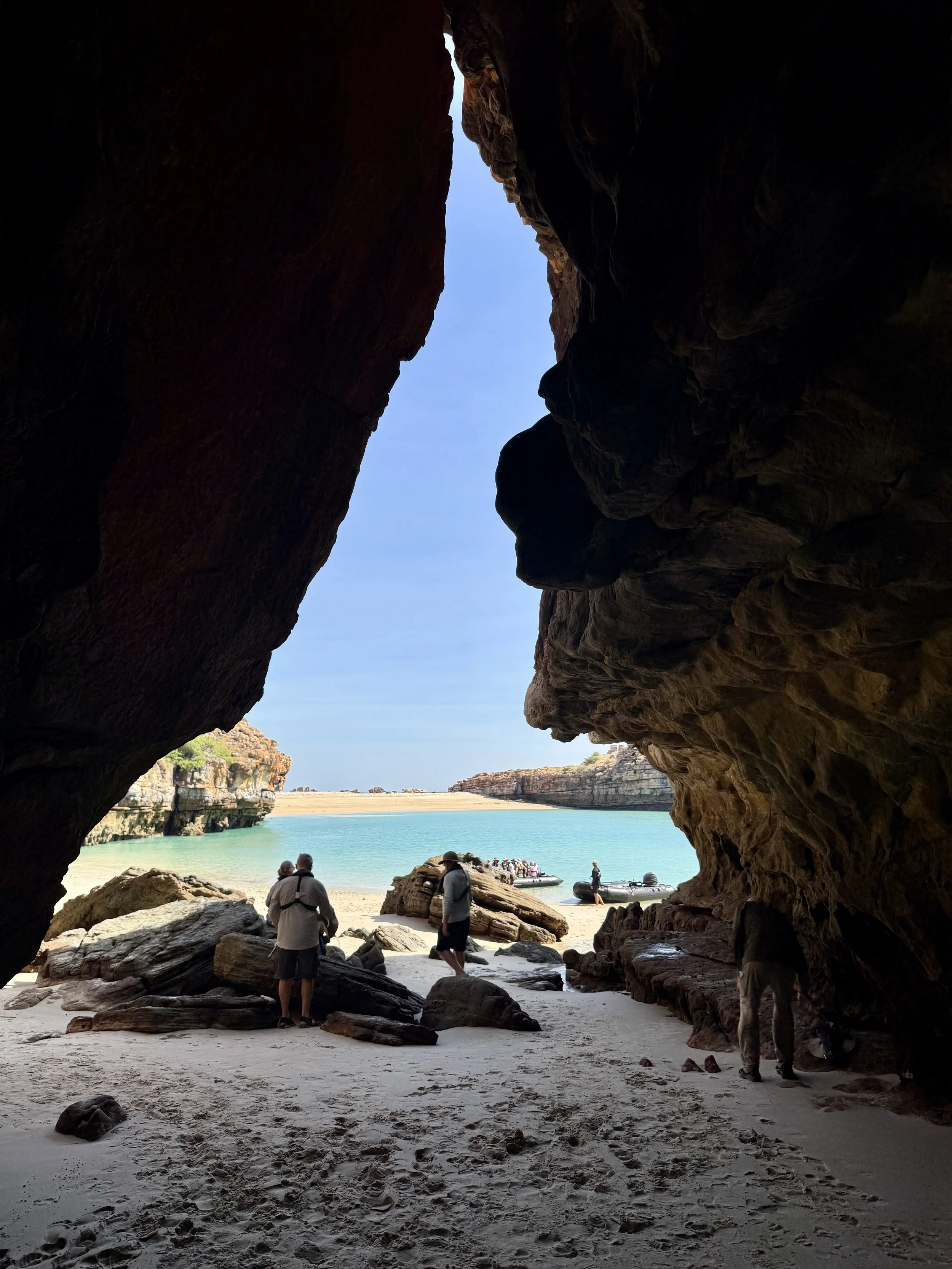
The Bonaparte Archipelago is where the trip shifted from spectacular to something closer to profound. This was my first time seeing rock art in my own country, and standing where the first peoples of this land have stood for more than 40,000 years left me genuinely overwhelmed. Our guides walked us through depictions of the Wandjina, ancestral spirit figures central to the region's Dreaming, and for the first time I felt like I had real insight into the lore of the people who call this Country home. Further along, we came to contact art, images left behind of the first ships and the English arriving on these shores. I found myself trying to imagine that moment from the other side, watching something so utterly foreign appear on the horizon, and what it must have meant for those who witnessed it.
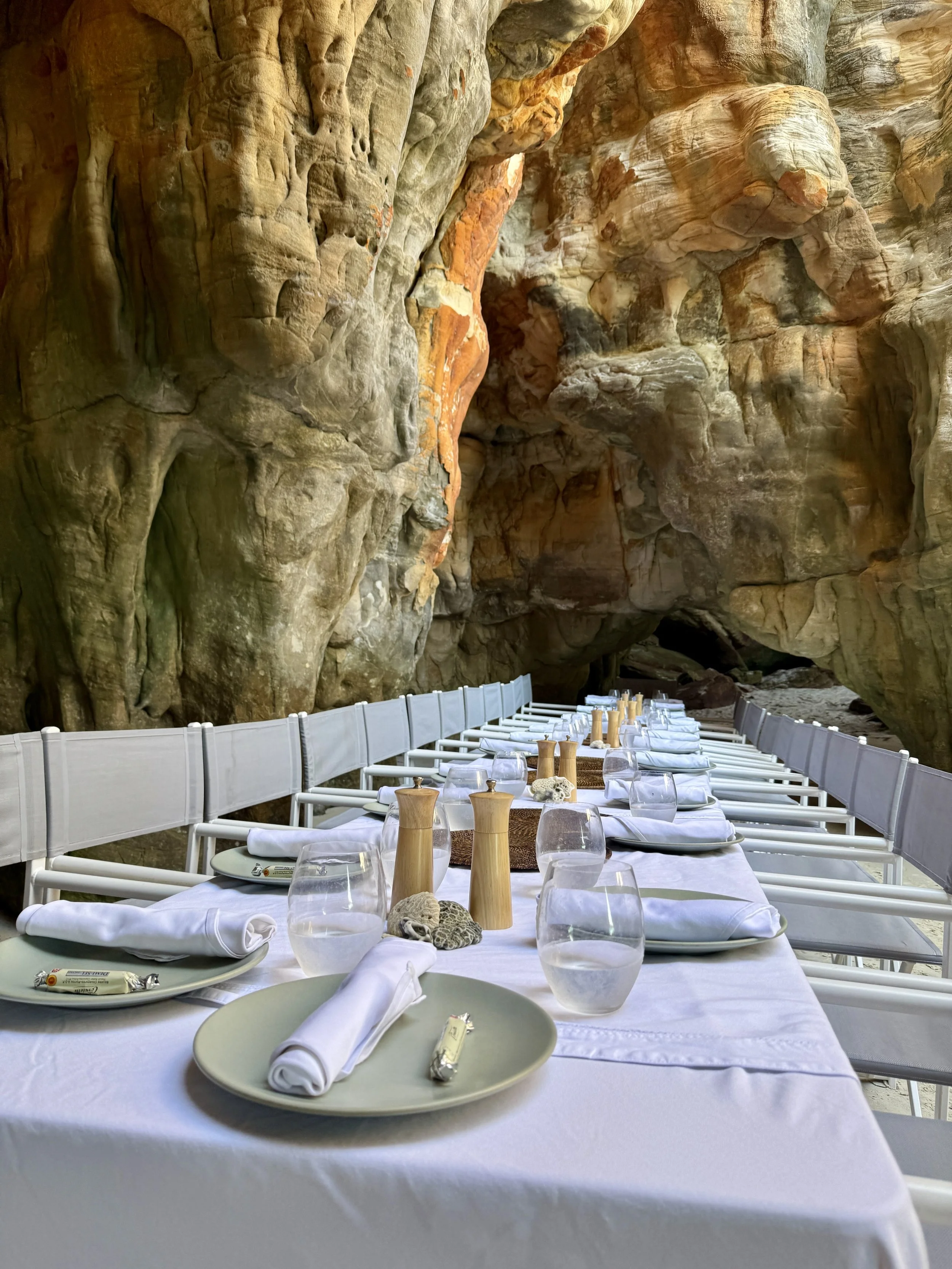
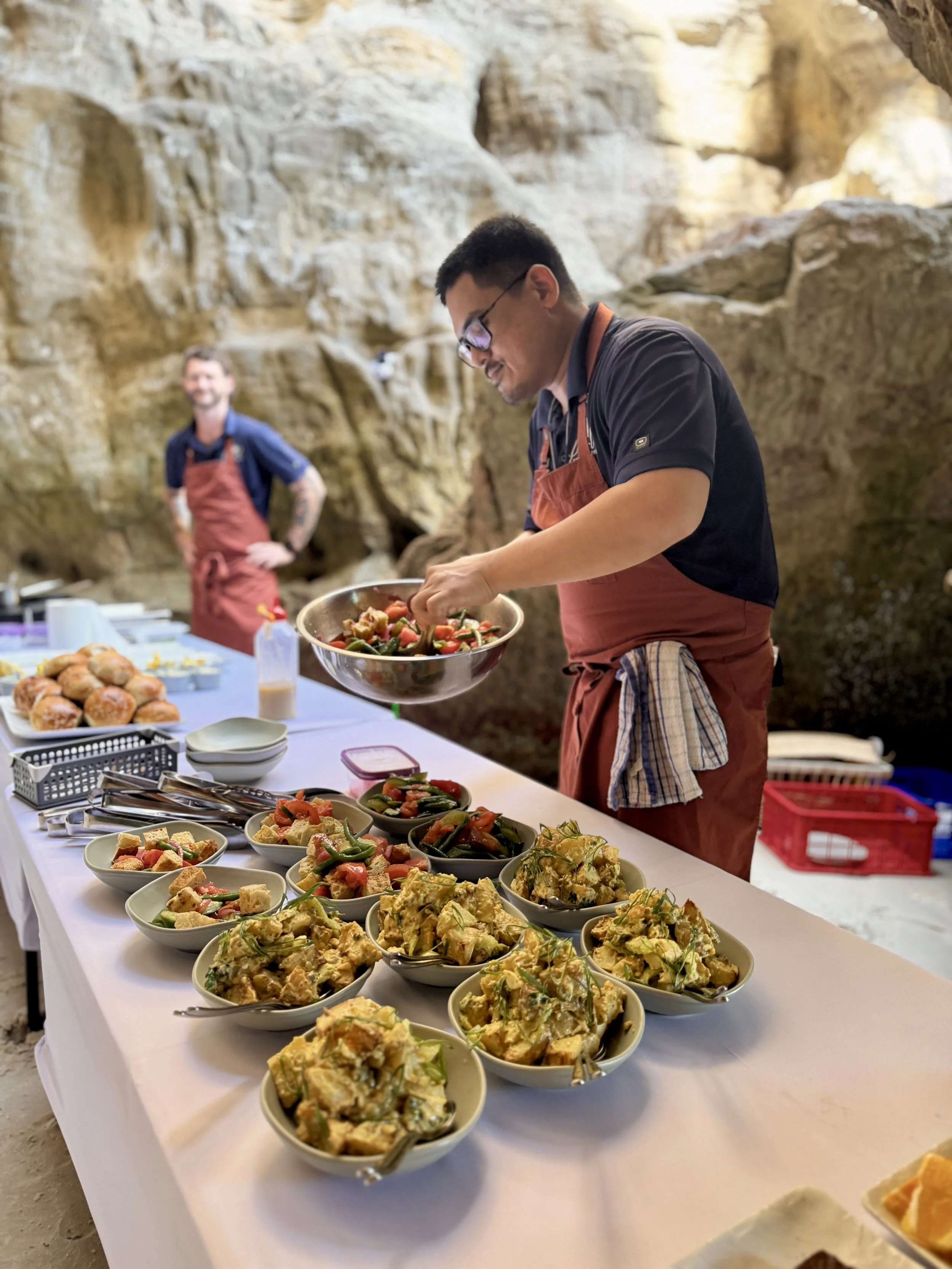
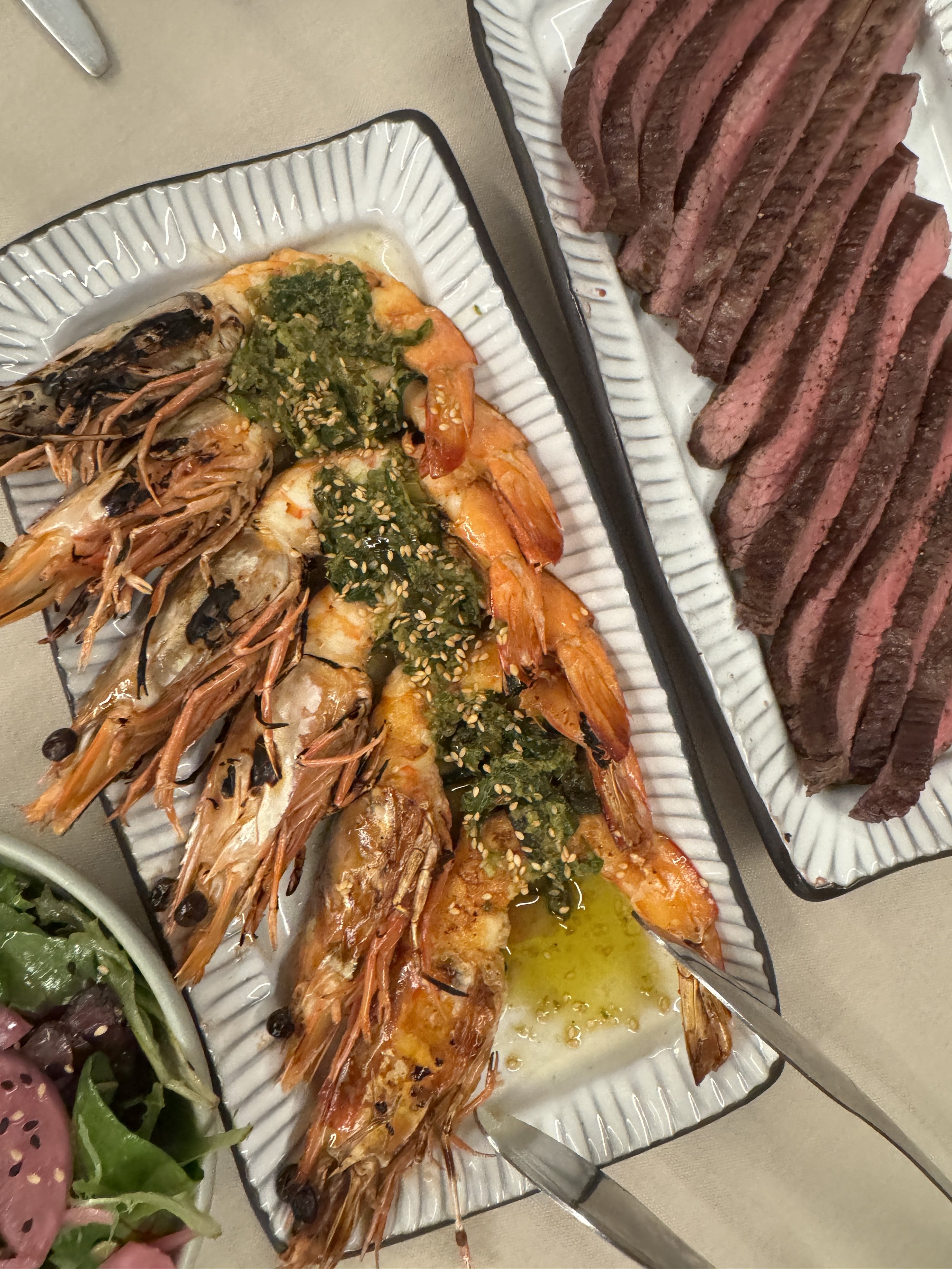
That same stretch of coast gave us what I'd call the standout moment of the entire voyage. On Bigge Island, the crew set up a long table lunch inside Cathedral Cave, white linen and proper glassware, somehow perfectly at home on a sandstone cave floor that has stood for longer than memory allows. A live flame hibachi grill turned out plate after plate of prawns while we sipped champagne and good wine, the whole thing unfolding like a cooking show performed just for us. Delicious and oh so memorable!
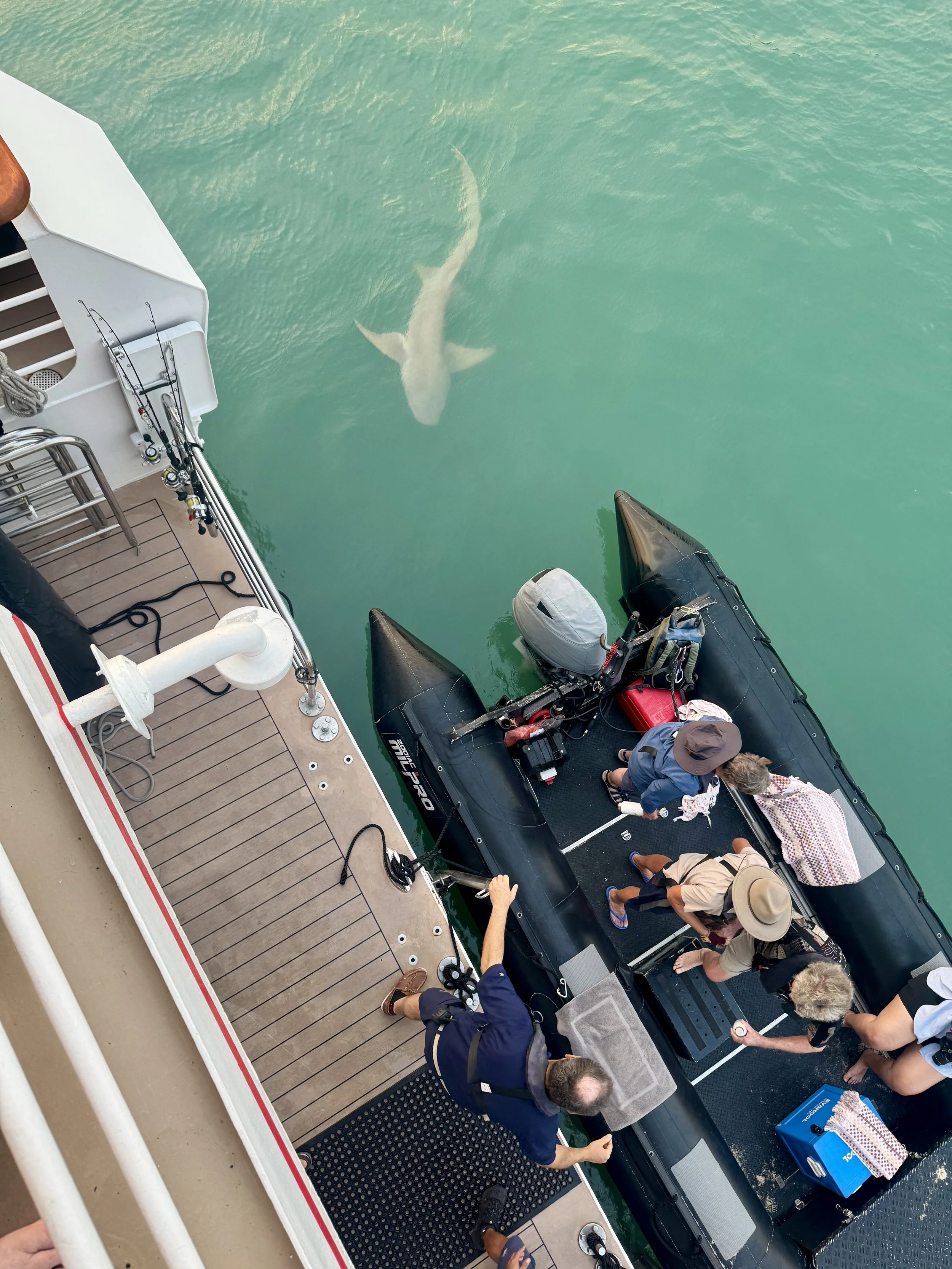
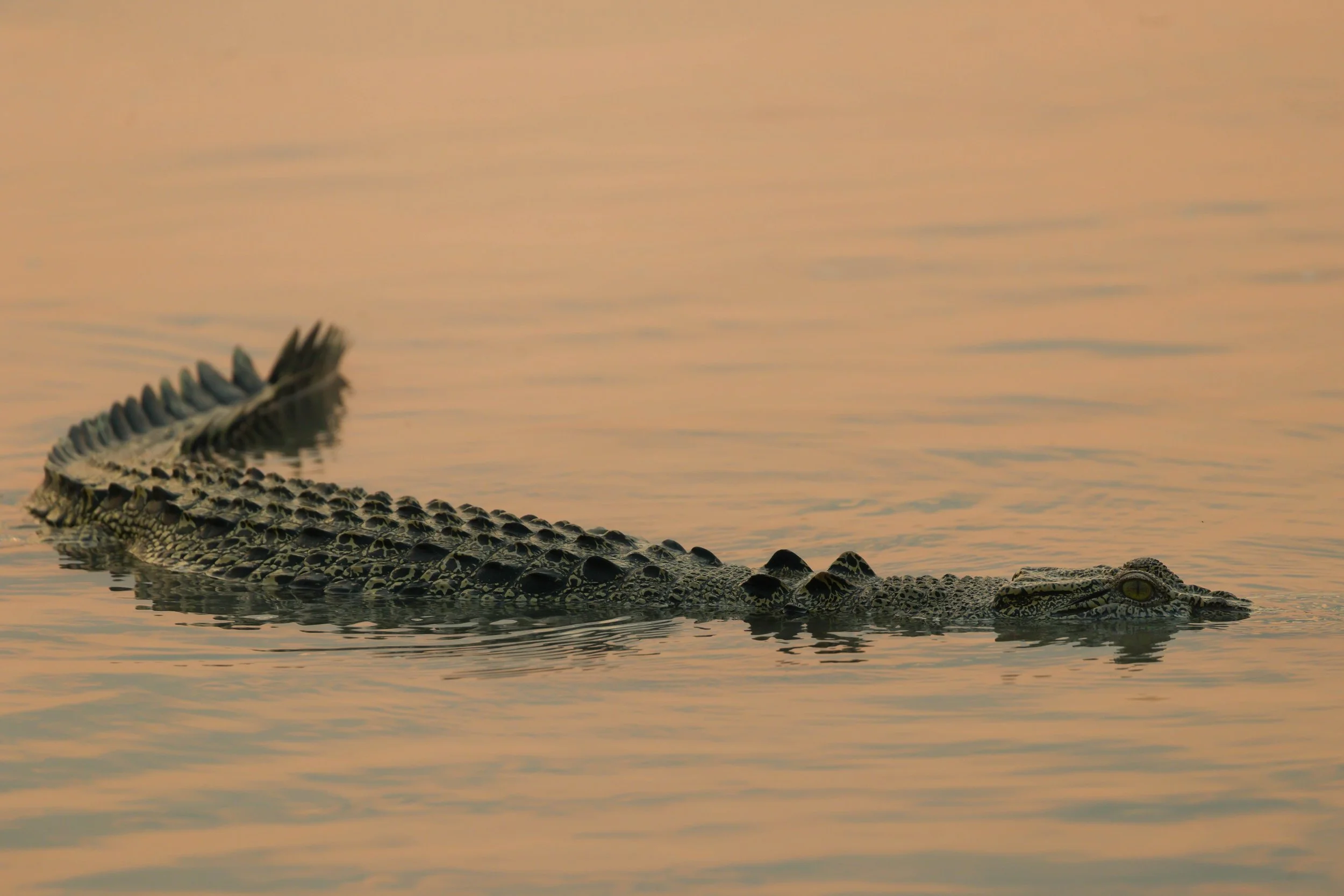
Wildlife showed up constantly, often when we least expected it. Dusky nurse sharks came gliding up to the boat with the curious, unhurried confidence of investigating a new visitor. Colloquially known as the ‘golden retrievers of the sea’, I heartily concur! Crocodiles made regular appearances along the banks too, and it was hard not to think about the ones we couldn't see, likely outnumbering the visible ones many times over, watching from beneath the surface. White-bellied sea eagles and brahminy kites wheeled overhead more mornings than not. At Prince Frederick Harbour, our guides taught us how mangroves actually breathe, spending so much of their life submerged, and we spent a happy hour tracking mudskippers as they flicked across the exposed mud at low tide.
Kuri Bay brought the chance to be one of only four guests to fly in the Grumman Mallard, a 1940s flying boat that's part of the Paspaley fleet, a genuine piece of aviation heritage rather than a novelty. I've flown in small planes and floatplanes before, but nothing compares to the feeling of stepping into something built in that era, for that purpose. We banked low over the more than 800 islands of the Buccaneer Archipelago, a landscape we hadn't yet seen from the water, flying low enough to pick out individual reefs and channels below. It's a perspective few travellers ever get, and one I won't forget, especially with the delightfully 40s style of one of our co-pilots.
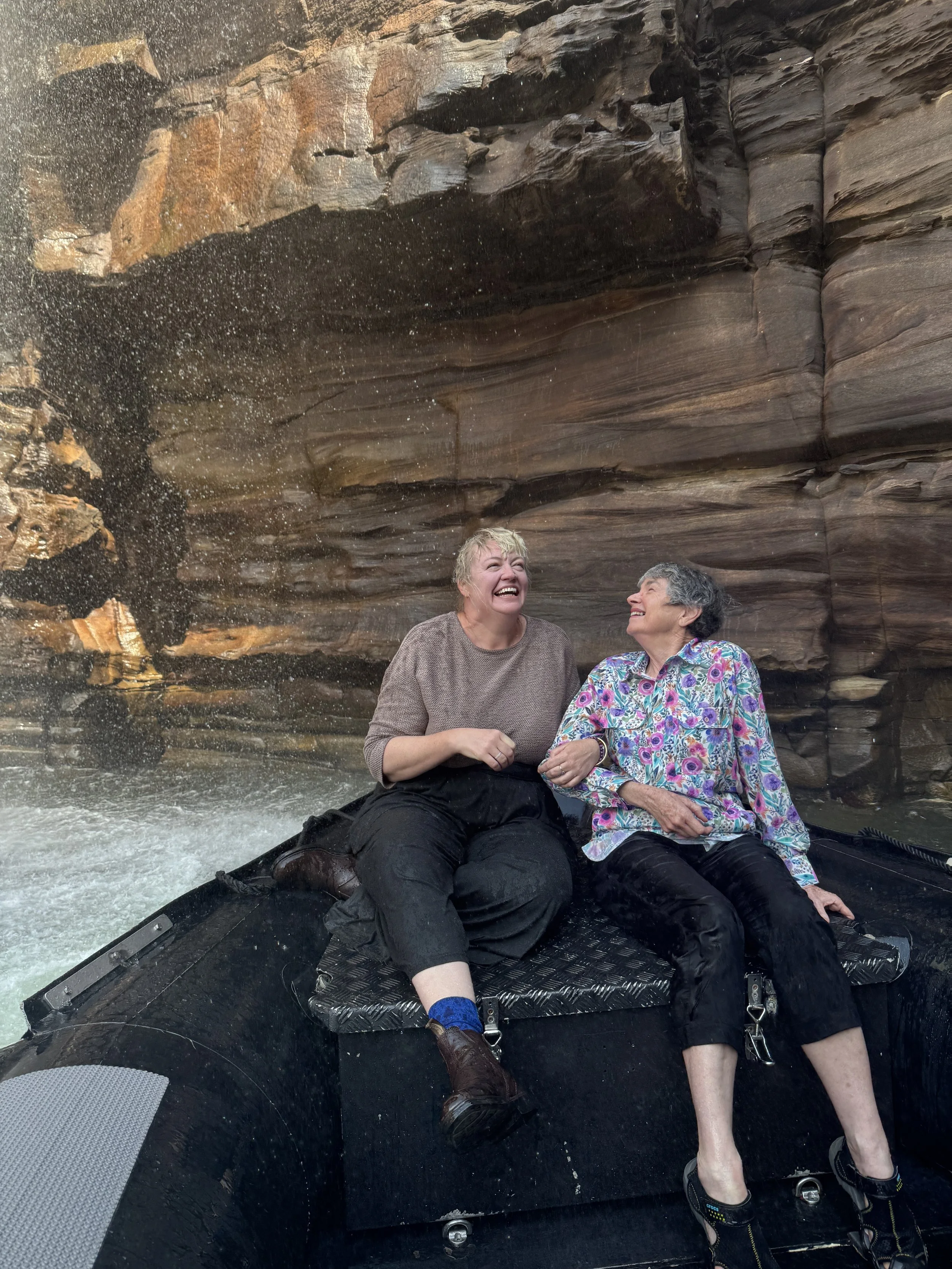
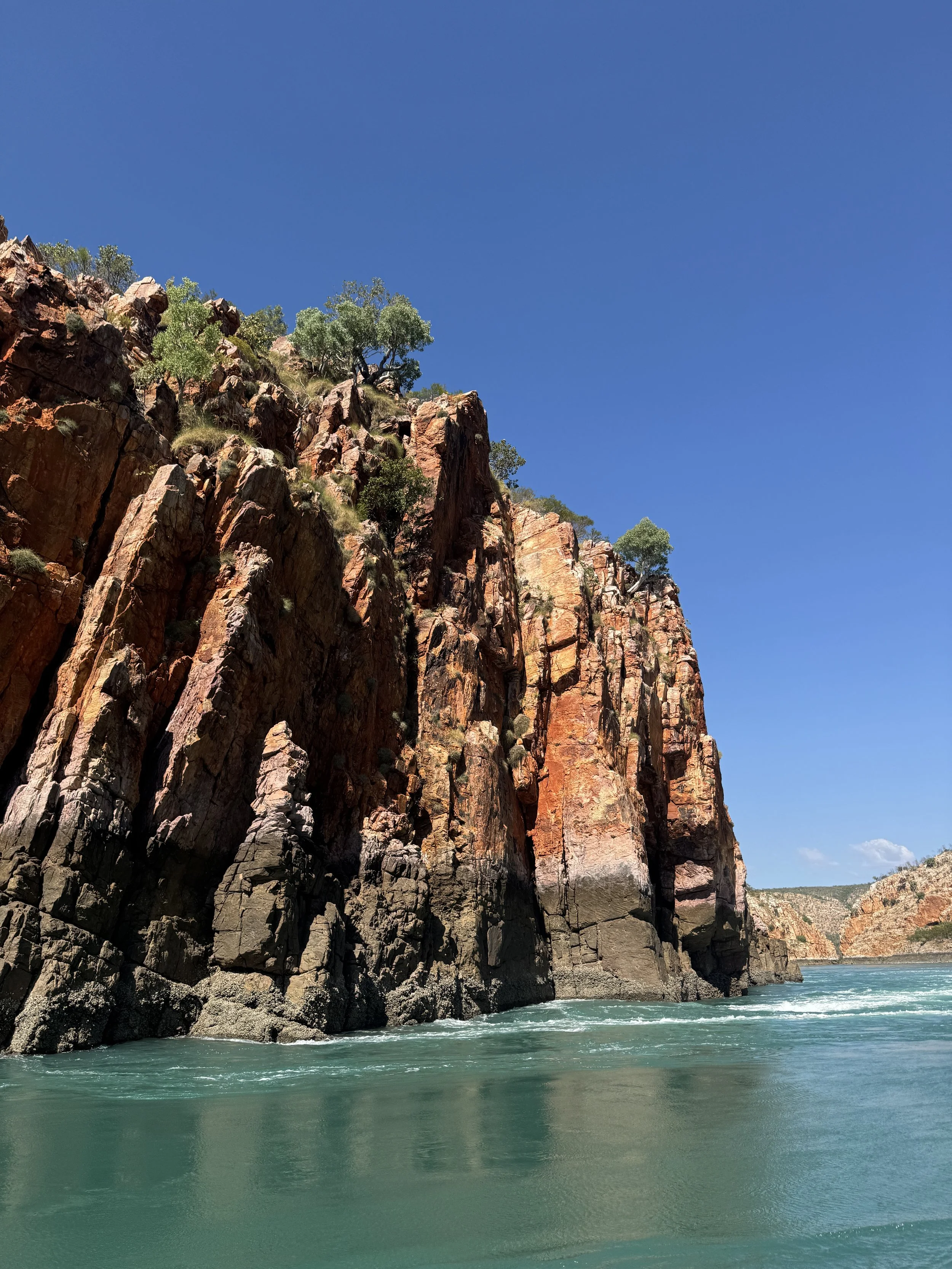
Collier Bay delivered the tides at their most theatrical. Montgomery Reef, known to its traditional owners as Yowjab, is the largest inshore reef system in the world, and watching it emerge is like witnessing a kind of slow-motion sleight of hand. The reef itself never moves. What moves is the water, draining away with such force and speed that within minutes an entire coral shelf appears to rise from the ocean, cascades pouring from its edges as it does. We were fortunate enough to experience all three stages of the tide, two of them entirely to ourselves without another vessel in sight. Our guide Danny told us the local creation story, of a grieving Wandjina figure and a rainbow serpent, said to explain the ferocity of these tidal movements, and having watched that reef perform its slow emergence, it wasn't hard to understand why this ocean is spoken of as a living, wilful entity. At Horizontal Falls, we felt that same tidal force firsthand, pushed away from the gap by a rush of water considerably more powerful than I'd expected, even having read about it beforehand.
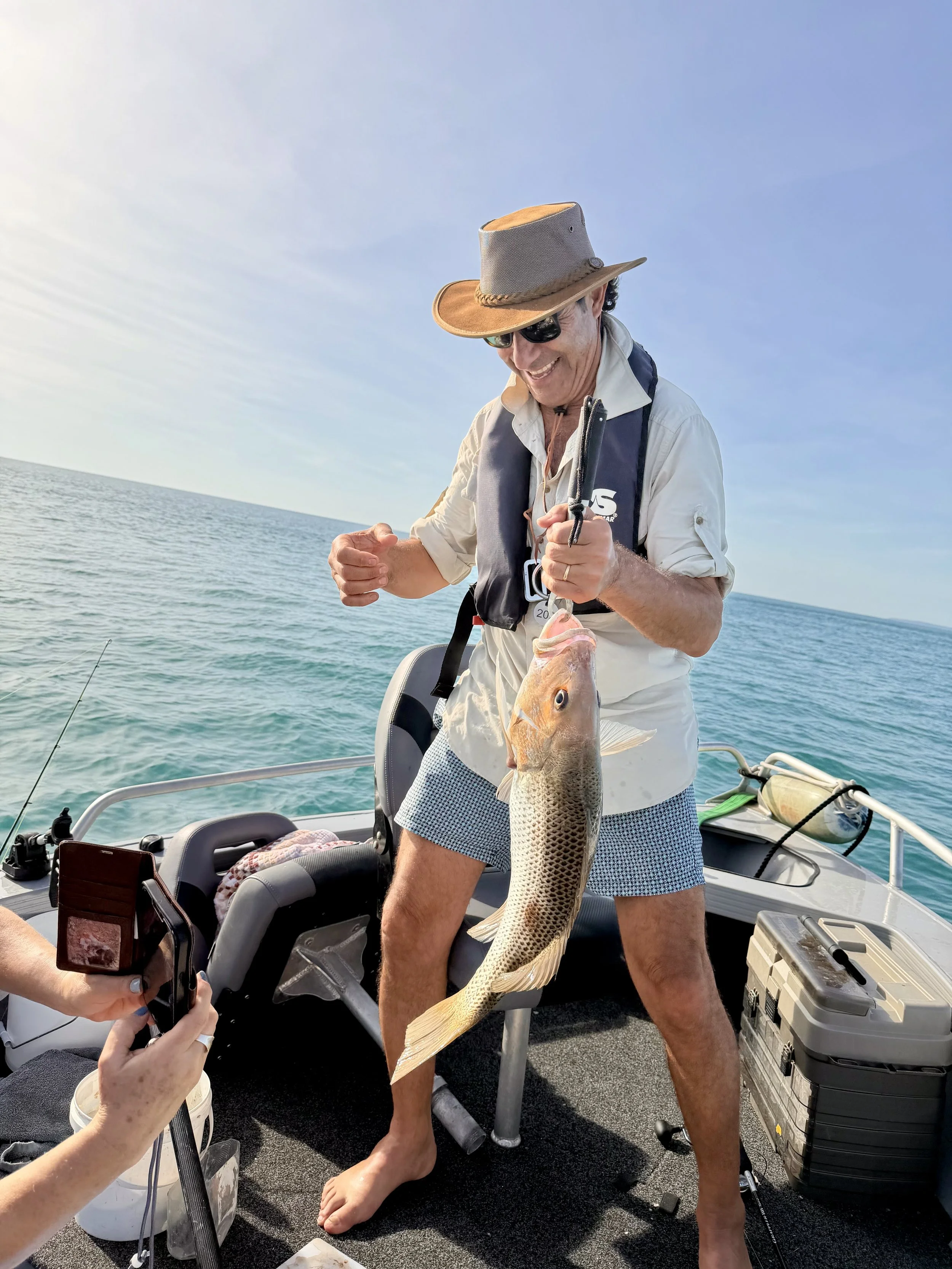
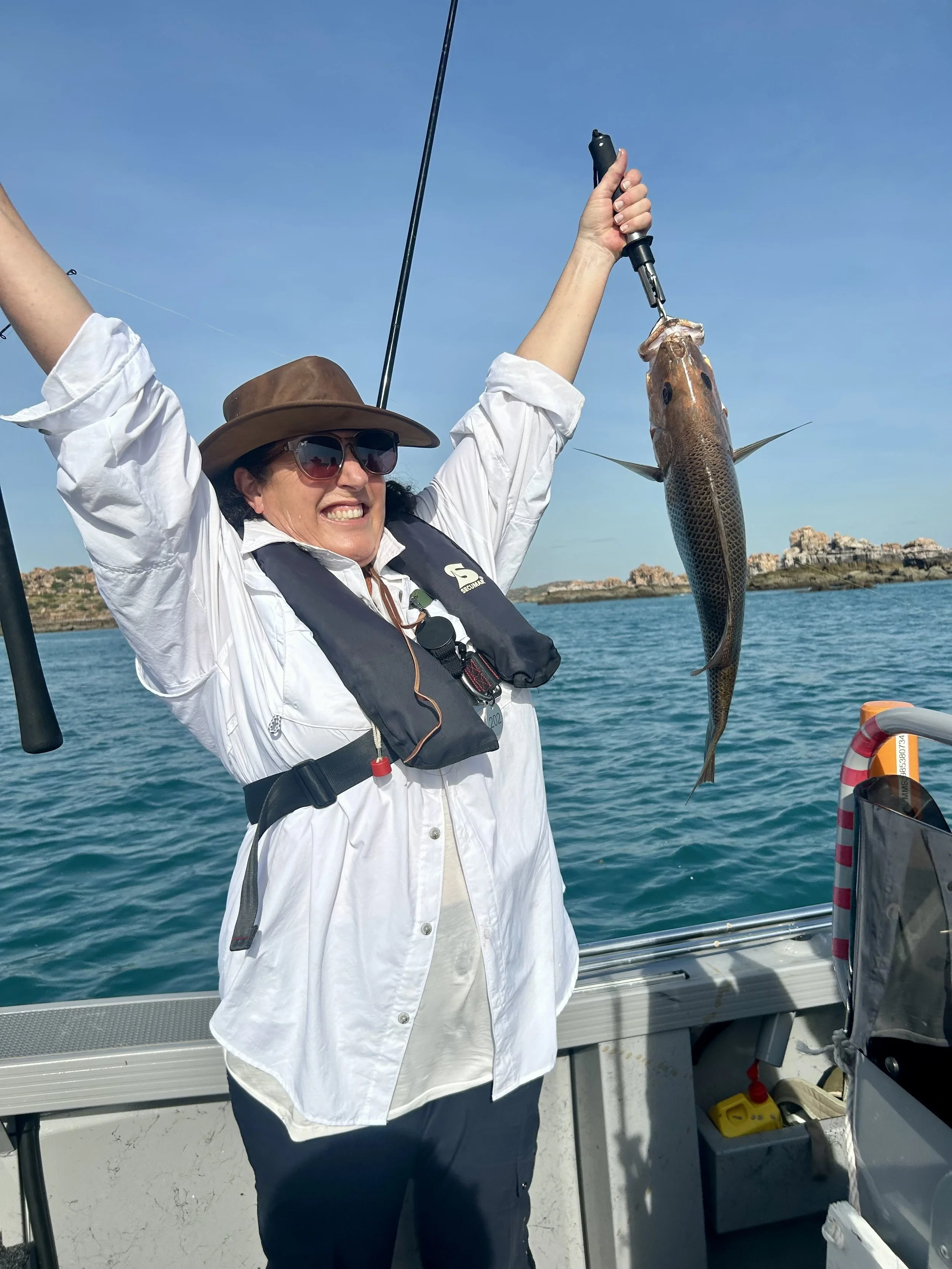
Somewhere amid all this, we also went fishing, and it remains one of my favourite afternoons of the whole trip. There were around five potential fishing days across the voyage, with two slots each day and groups of just four heading out at a time. The boat was new and beautifully set up, individual seats, a proper range of rods, and sonar equipment sophisticated enough to make even a first timer feel competent. Our guide James was patient and sharp eyed, and when my travel partner hauled up a 50cm golden snapper, I felt like we’d won something. Half the fun was back on board too, waiting to hear what each group had reeled in. Golden snapper, giant trevally, tuna, the stories grew more colourful with every retelling!
Life on board
If the landscape is the reason you come, it's the people who make you want to stay. Our expedition leader Robyn had more than twenty years of experience across Antarctica, the Arctic and the Kimberley, and between the whole expedition team there was easily forty plus years of combined knowledge guiding us. That kind of experience shows in the small things, the calm way a change of plan is handled, the confidence with which a Zodiac is nosed into a tricky landing.
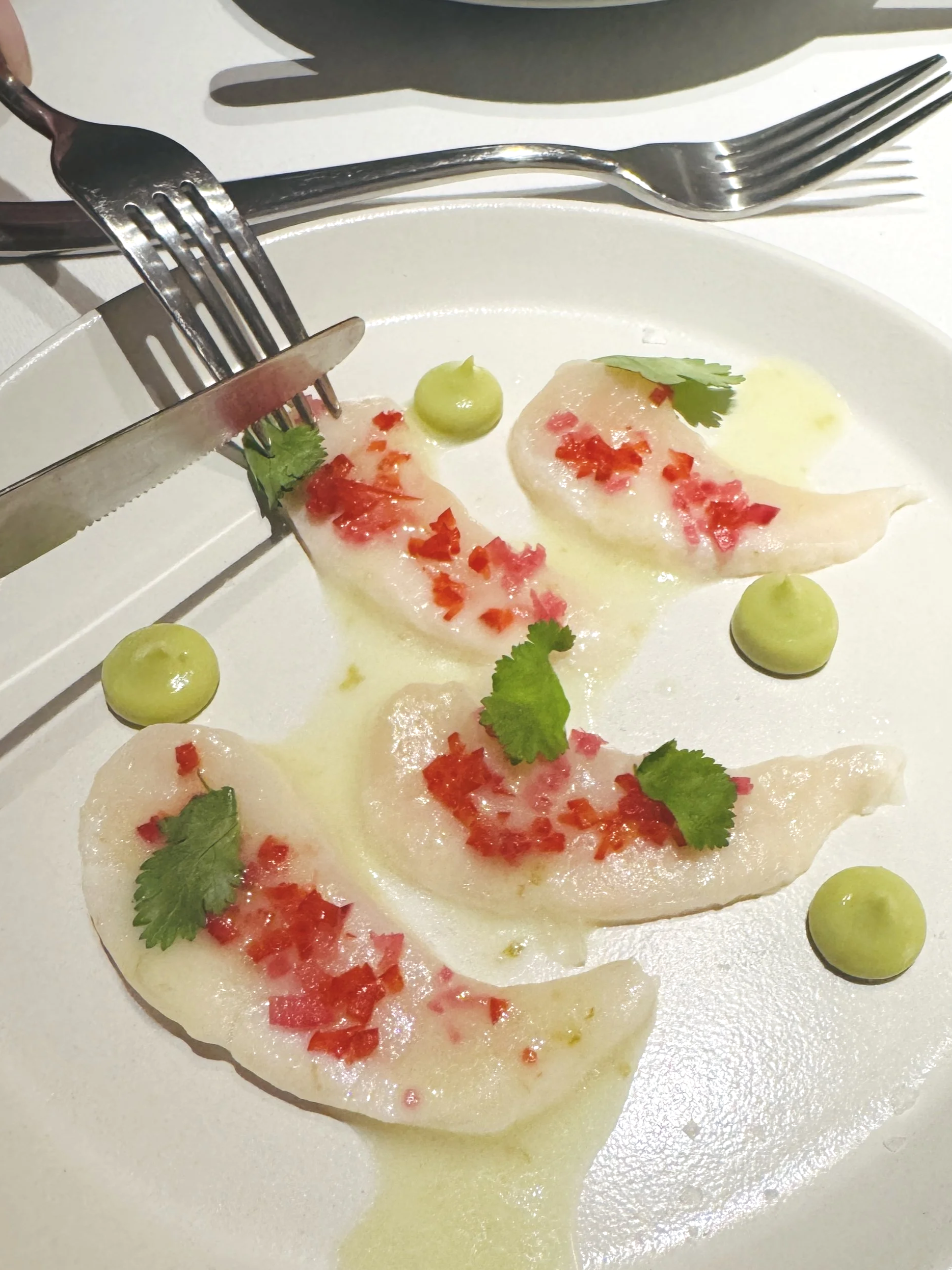
The food deserves its own paragraph, honestly. A three course dinner every evening, an a la carte breakfast made to order, and lunches that were casual but properly good, a spread of salads, proteins and antipasto that never felt like an afterthought. The culinary program was designed by Serge Dansereau, the chef behind Sydney's Bathers' Pavilion, and brought to life on board each day by Head Expedition Chef Alex Bentley. Alex clearly loves what he does, and every evening he'd talk us through the menu with a level of detail and enthusiasm that made each course feel like an event. The wine list matched the food, and I liked the Bunnamagoo wine so much I've since ordered some for home!
Then there were our fellow guests, all 28 of them, warm and easy company from the first night. I've noticed this on other expedition cruises too, there's a particular type of traveller drawn to this kind of trip, well travelled, curious, genuinely interested in the place and in each other, a different crowd entirely to what you'll find on a bigger ship. Does this sound like you? Try it, you’ll love it, I promise!
The practical bits
Paspaley Pearl operates in the Kimberley between April and September, and this itinerary runs both directions, Kununurra to Broome or Broome to Kununurra. One detail worth knowing if you're travelling solo: there's a single cabin available each sailing with no single supplement, so if that's you, book early, because it won't stay available for long. Other times of the year the boat ventures into East Indonesia and Raja Ampat, Borneo, Papua New Guinea, and down the east coast of Australia. There’s a sailing to suit everyone!
If you're weighing up whether this is the right way to see the Kimberley, I can tell you honestly that it's unlike anything else I've experienced on the water. It's not about excess. It's about access, to places, to history, and to a part of this country that very few people ever get to stand in. Get in touch and I'll help you plan it properly.